Dark Commons
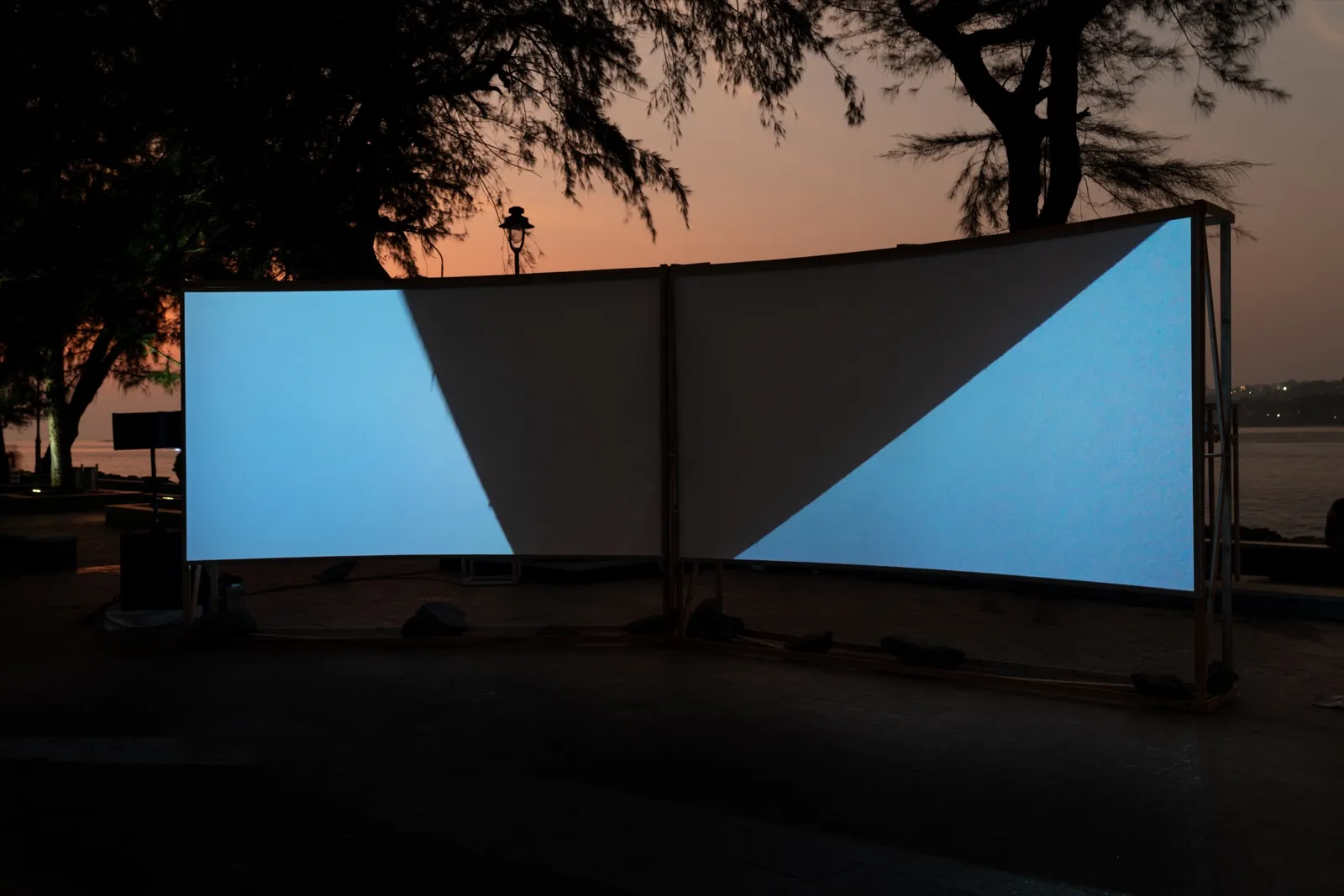
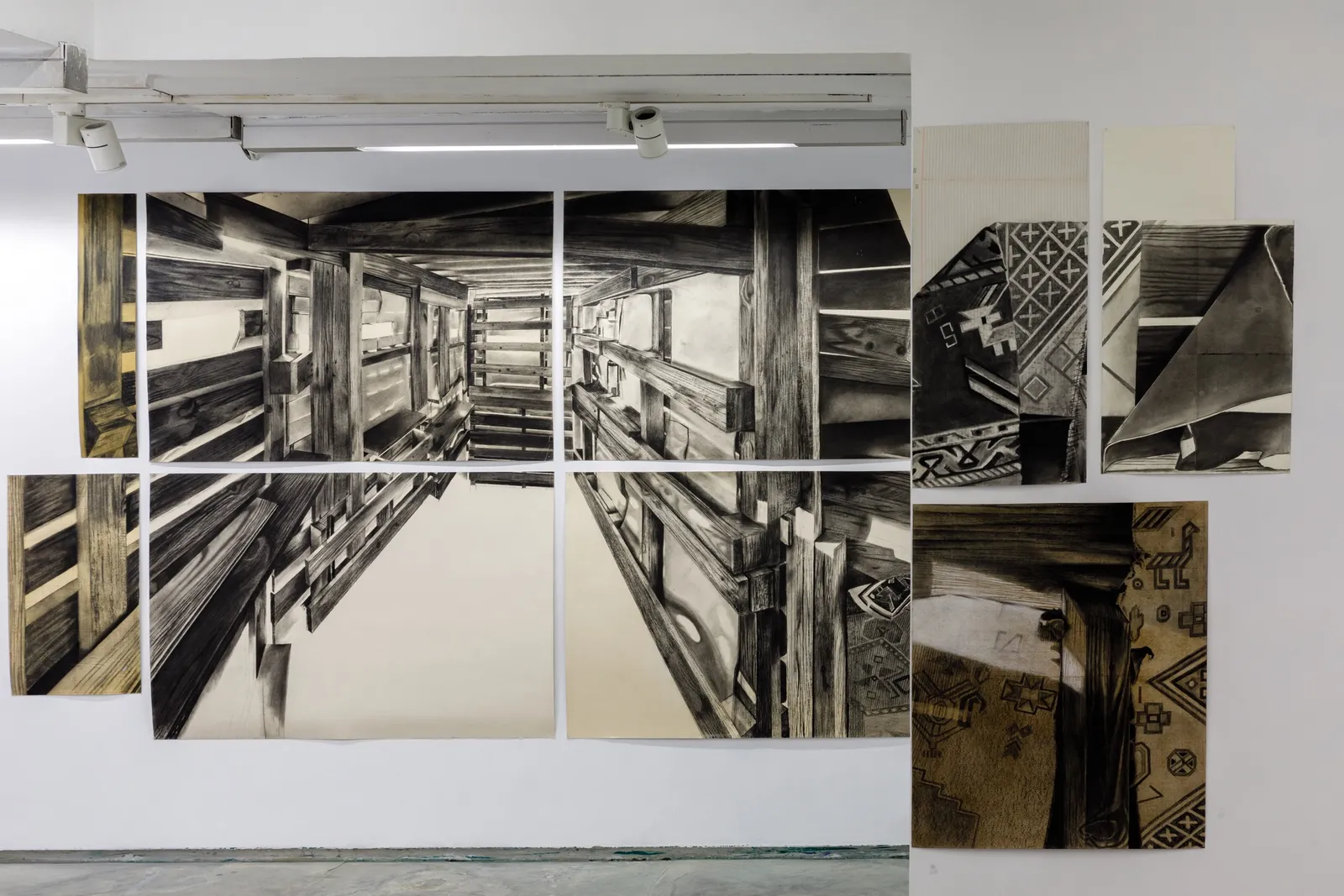
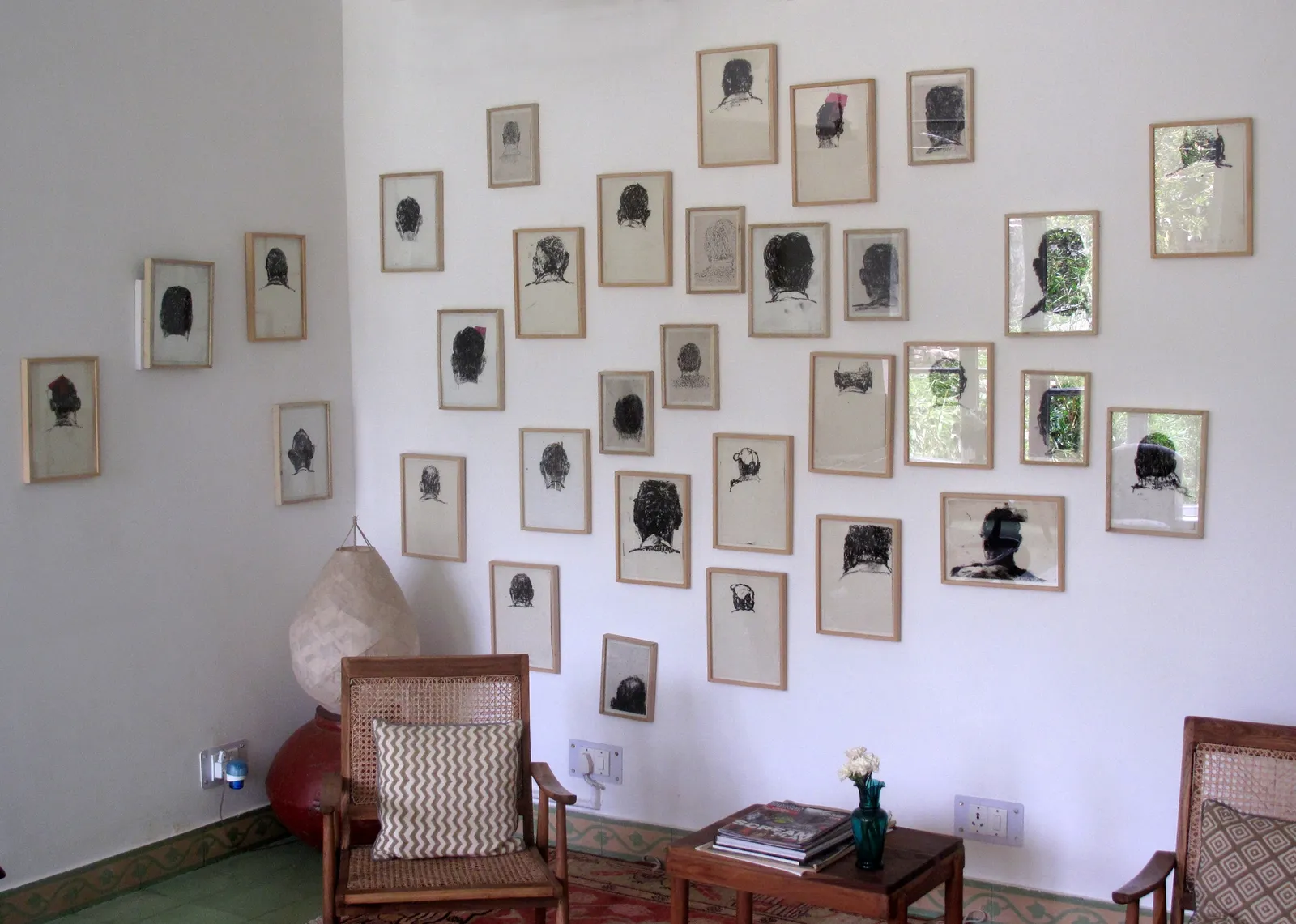
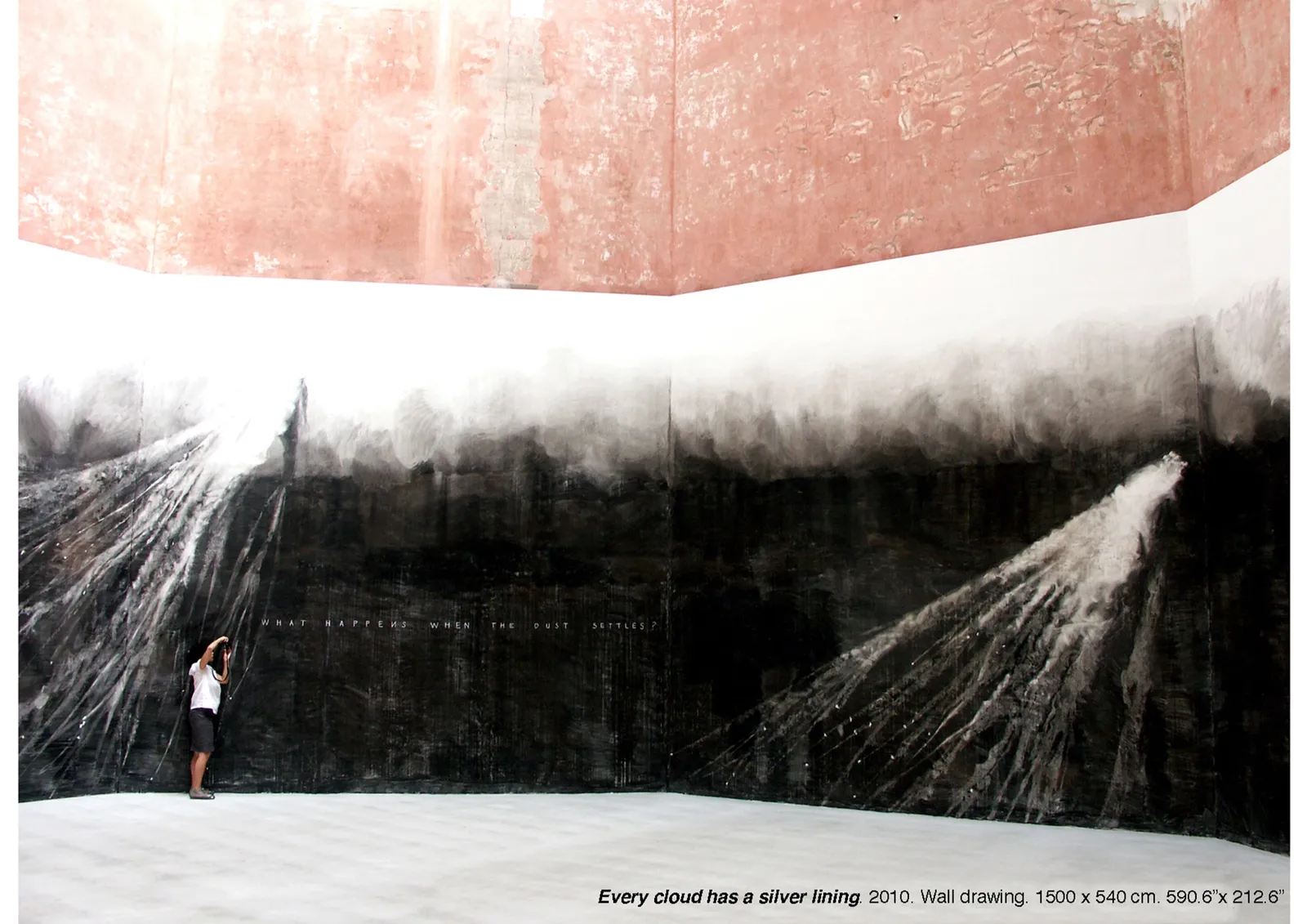
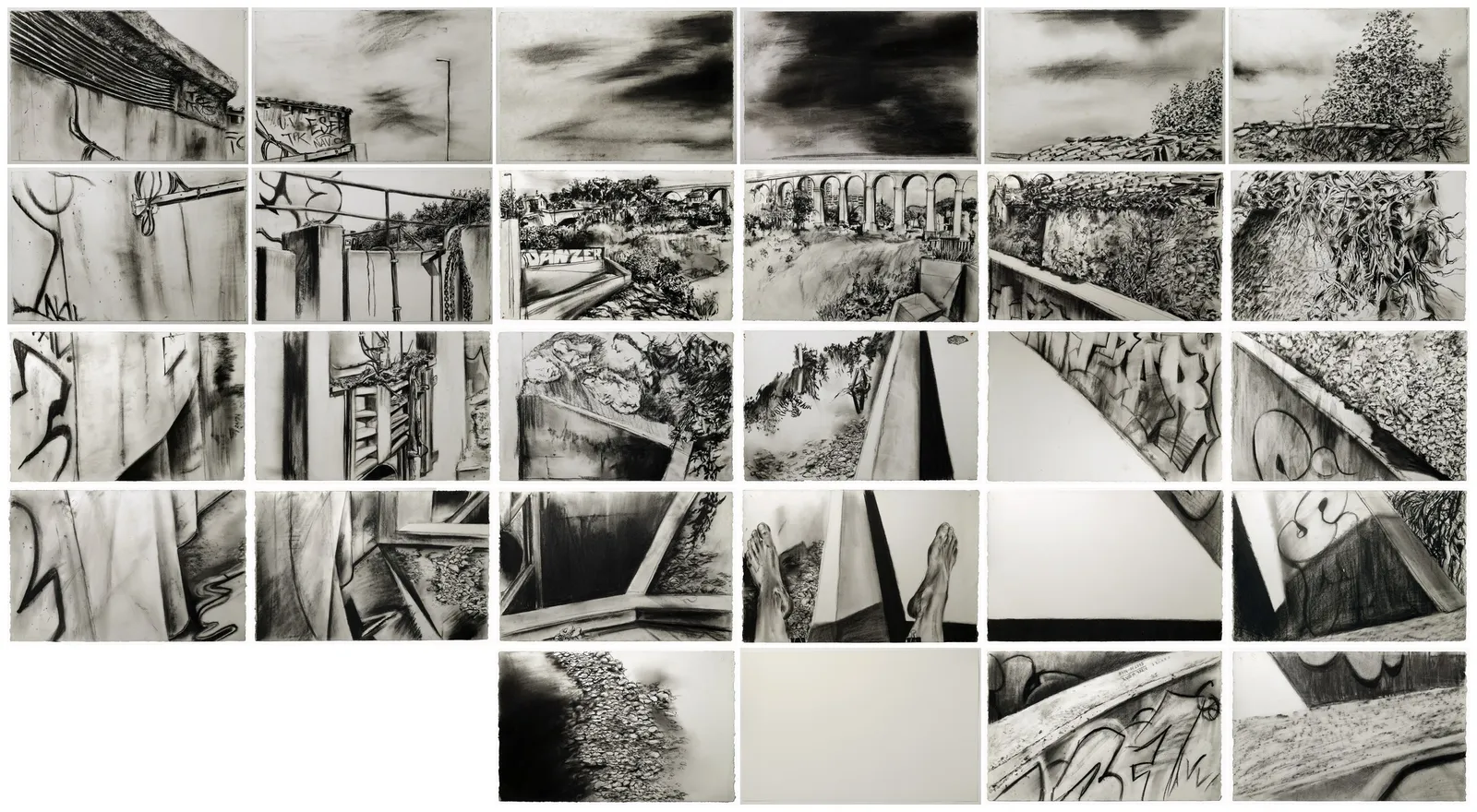
Night, in this cycle, is not atmosphere but a position — a refusal of full legibility. Taking its bearings from Junichiro Tanizaki’s In Praise of Shadows, whose title the two-channel film borrows directly, these works treat darkness as material rather than as the absence of light: the wastegrounds of Les Aygalades, drawn sheet by sheet along a Marseille canal, a wall given over whole to charcoal in Every Cloud Has a Silver Lining, the cosmos held at the edge of the visible in A View from Nowhere.
What is hardly visible by day — a landscape of small constructions, precarious settlements, objects adapting to their surroundings — is precisely what the night reveals. The cycle claims obscurity as a kind of shelter: the right of places, and of the people who inhabit their blind spots, not to be fully seen.