Exhibition
Derniers jours
First solo exhibition — the hotels of Belsunce
Galerie du Tableau, Marseille 2004
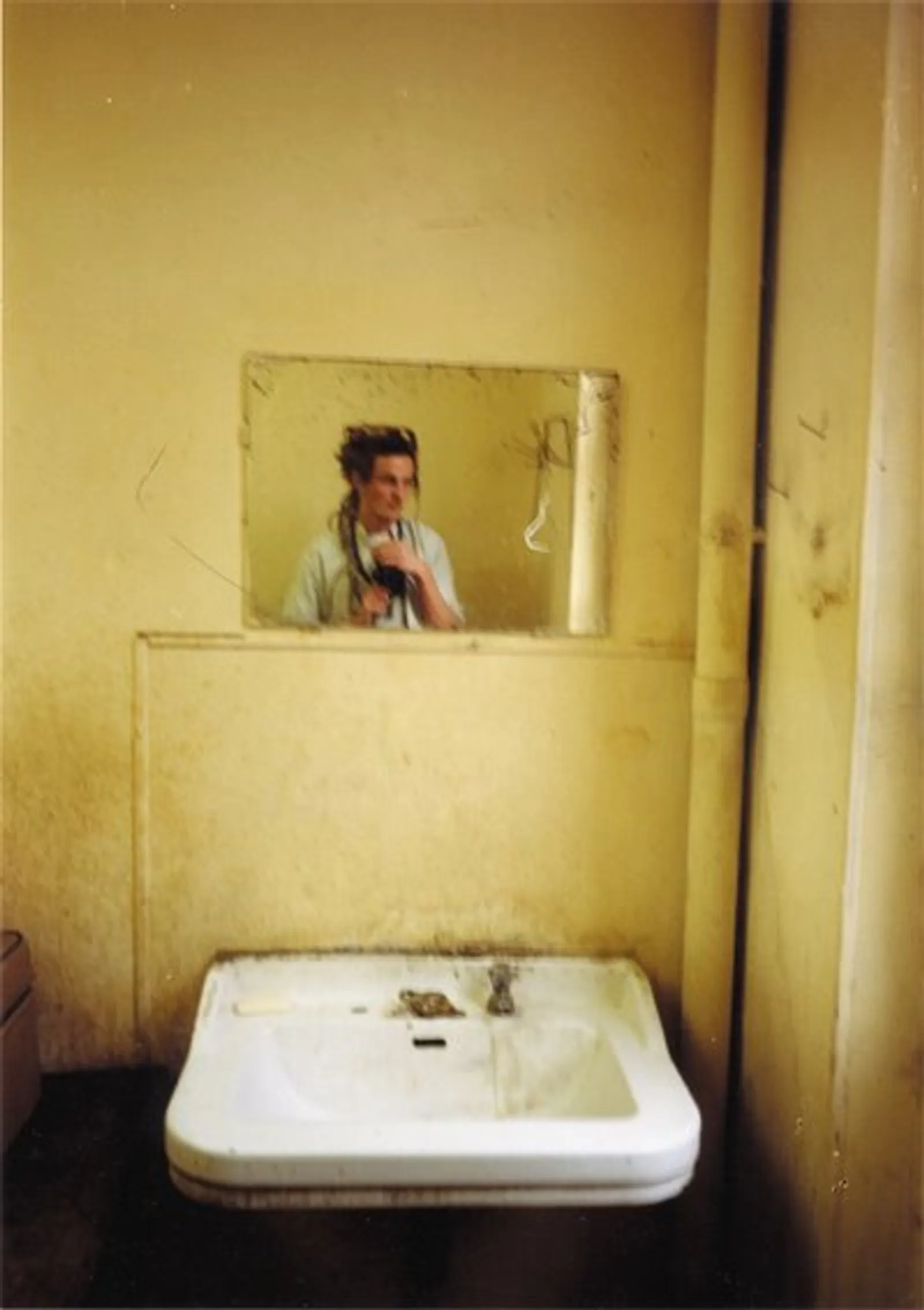
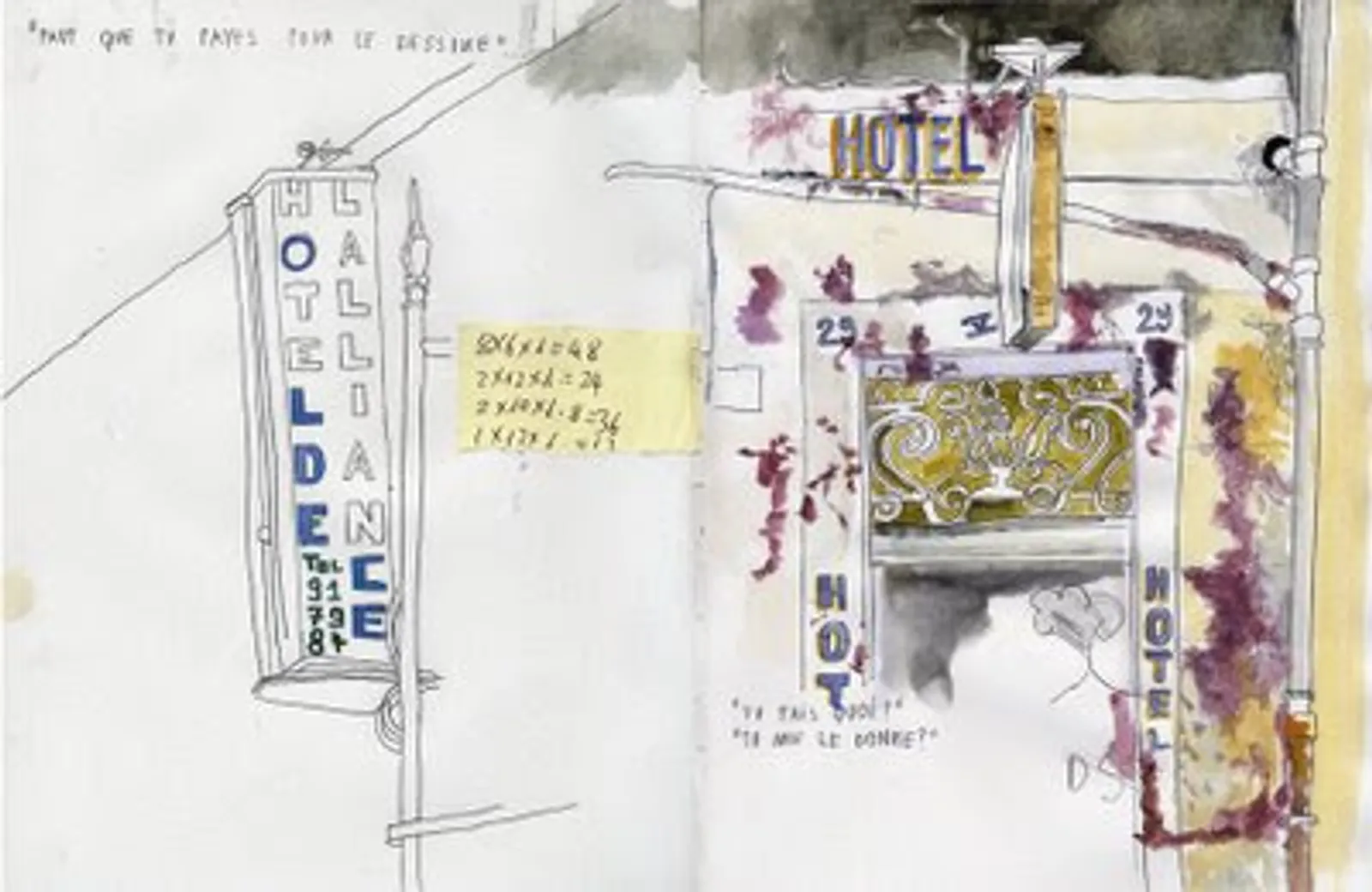
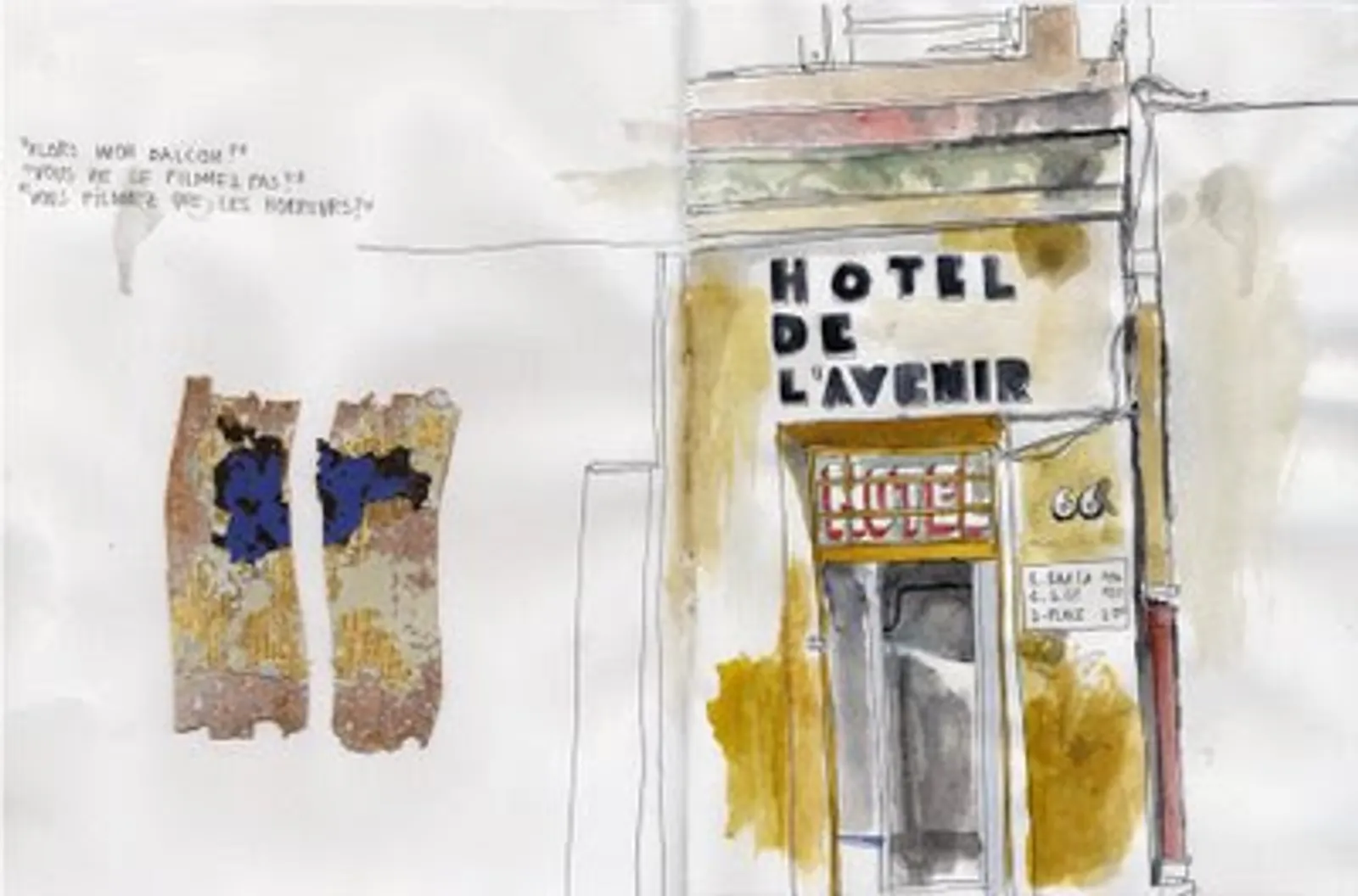
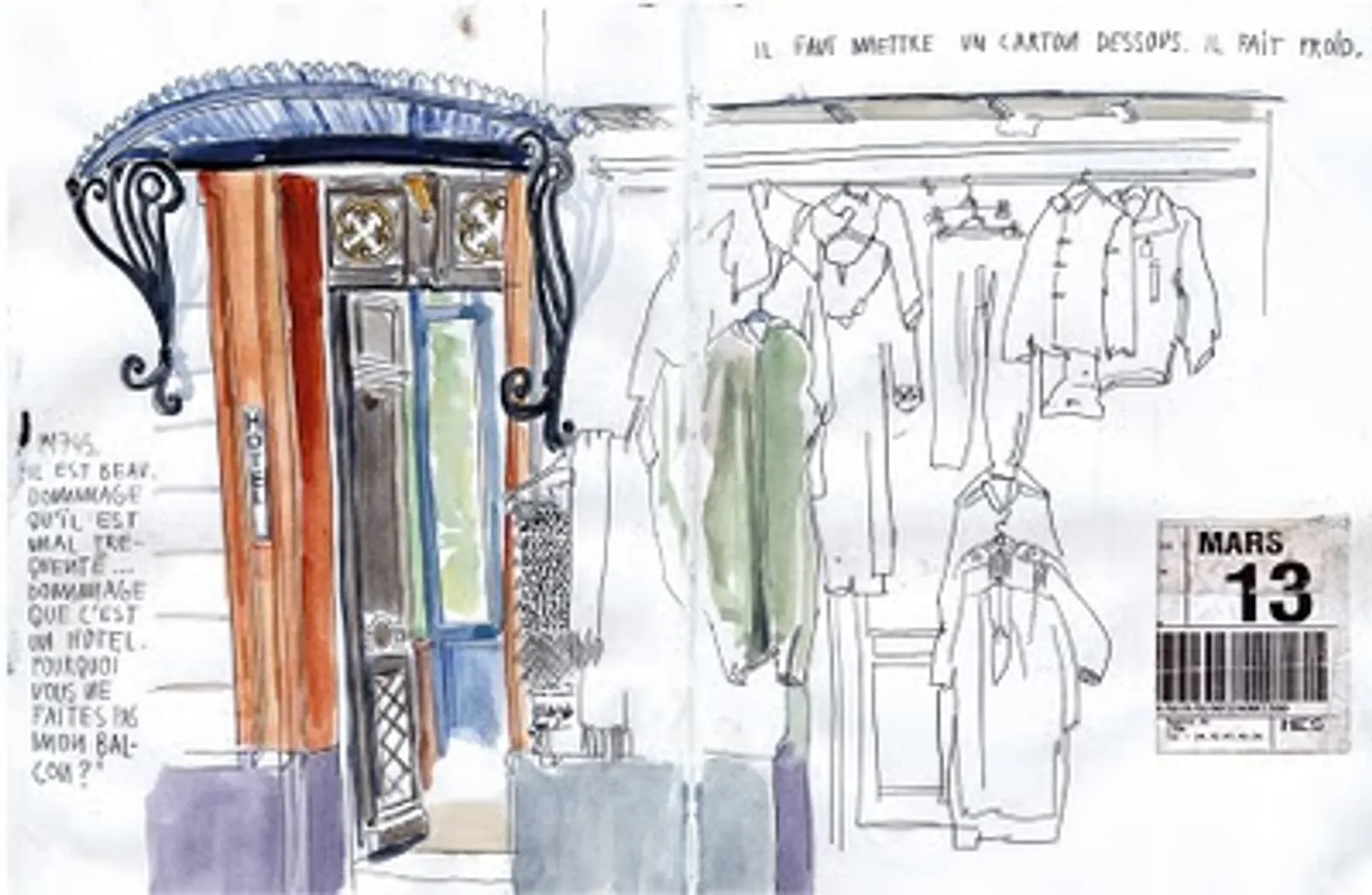
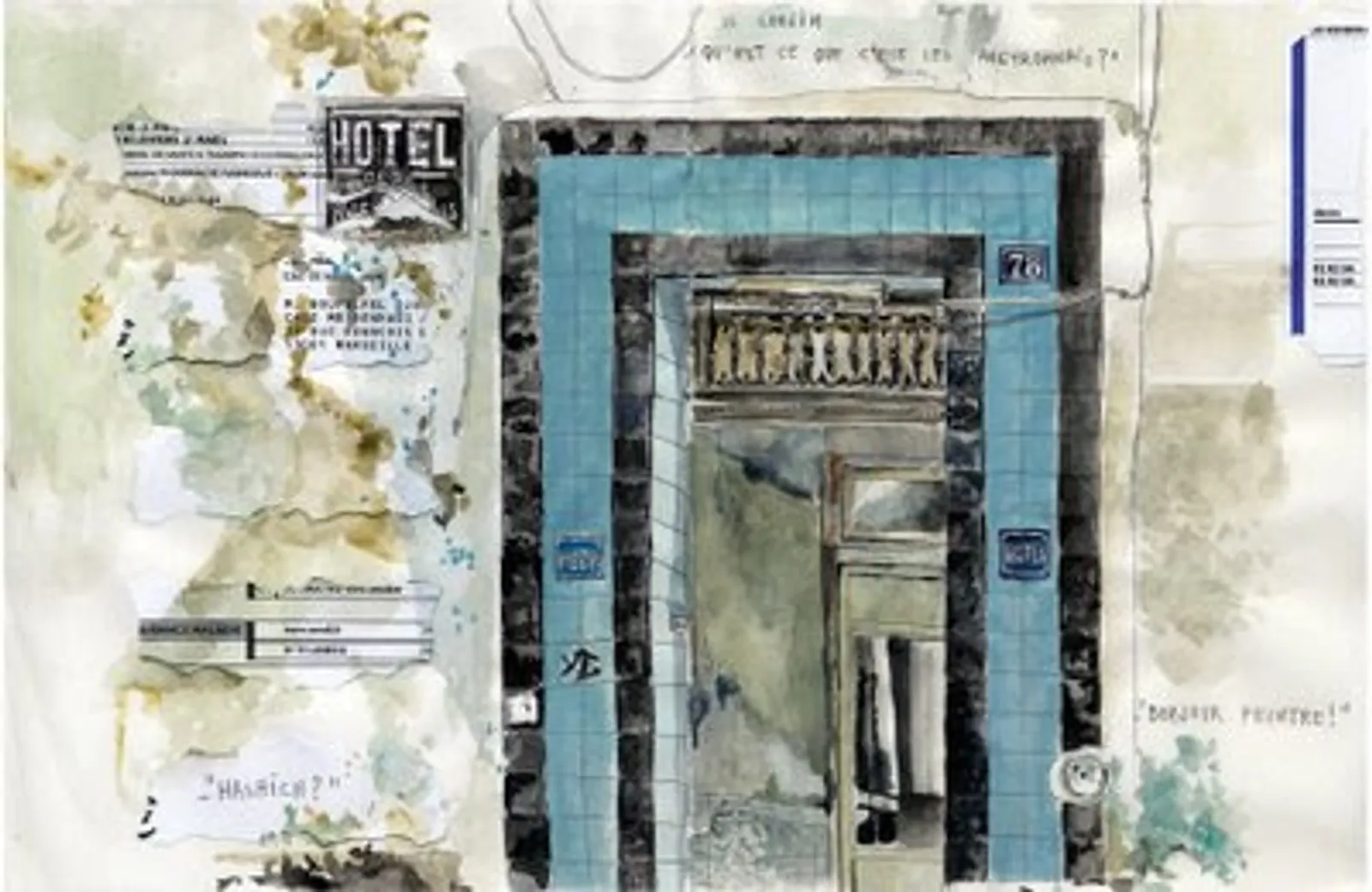
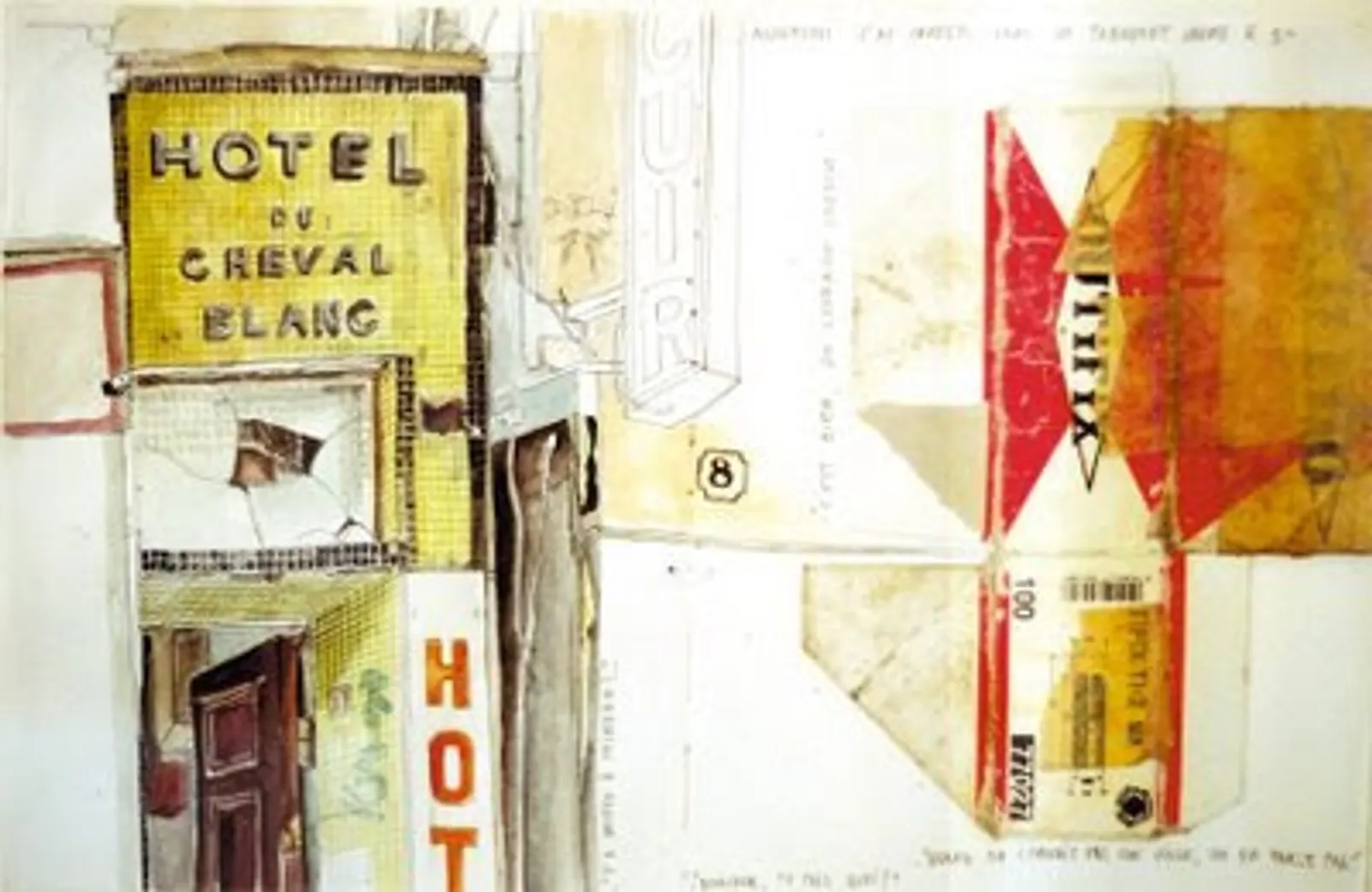
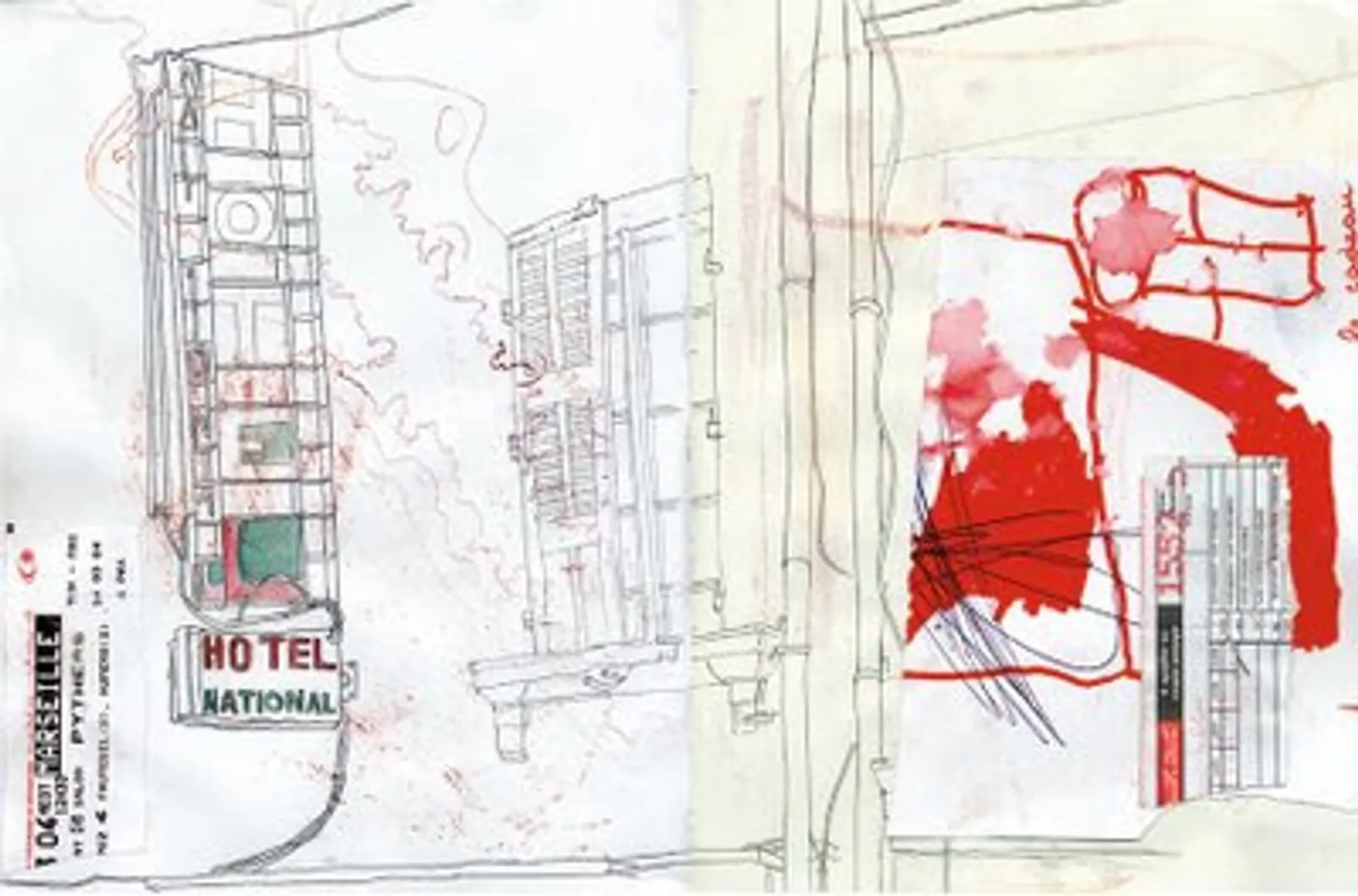
For his first solo exhibition, at the galerie du tableau, Julien Segard chose to show watercolour-enhanced drawings that attentively survey the entrances of a few hotels in Marseille’s Belsunce quarter; photographs of chairs set out on the pavement, awaiting the great departure; and a self-portrait in a mirror, made in a hotel room in the same quarter. The room is shabby, but the light forms a halo of gold.
Picture it. The artist (a social pretext that deflects awkward questions — the artist controls nothing, investigates nothing, serves no master, no television, police force, or urban- planning agency; he is nobody’s delegate), white shirt, blond dreadlocks backlit, a tall pale silhouette — the travelling artist is on location. He has settled in, back against the wall opposite, facing the hotel entrance. Under the curious gaze of passers-by, having first talked things over with a wary owner, he began the patient work of transcription, attentive to the smallest detail, to the tiniest patch-up job. Contemplation is a pact struck with time; it cuts directly into the crystalline lens of the visible. Objective: to take the subject at its word, not to stray from it by an inch. To omit nothing of the world’s scuffs and scars, like Miró scrutinising The Farm; nothing — no makeshift splice, no gutter, no ceramic tile, no letter of the hotel’s name, no line on the price board escapes him. The project is realist; it sets itself the ambition of exhausting, with the meticulousness of a Perec, an entire district of the visible. But make no mistake: Julien Segard does not render this fragment of the world in such detail in order to deliver an exhaustive view — what he draws does not lie only in what falls within what is seen, but surfaces beneath the images: the traces, the accidents of an ordinary disappearance.
The hotels Julien Segard draws and photographs — former brothels, more often than not — pass through seemingly quiet days, under the provisional shelter of the liquidators; but what the painter seeks to capture, one senses from the very first glance, belongs to the last days of a story. Something like the end of the novel-city.
Time here seems to have stopped, though not entirely passed. It is this time of survival, this “in-between” of last days, that carries these drawings far from documentary style, toward narrative, fiction, film — attuned to the music of the city and to vanished voices. Scraps of handwriting, fragments of paper gathered on site, snatches of speech caught and jotted in the margin, drawings by curious children to whom the painter opened his notebooks — this whole apparatus of imprints and borrowings that captions the sheet of paper as it settles there, forms a kind of soundtrack. The eye lies in wait for imperceptible clues; it scans for novelistic messages that sight alone does not reveal. What a story! one tells oneself, before this ordinary entrance. What a journey, in that chair set down on the pavement! What an icon — half comic strip, half Atelier au mimosa, half road movie — in that self-portrait in the mirror! These Last Days are the first days of Julien Segard’s fine journey.
Translator’s note: “la fin de la ville roman” plays on the French word roman (both “novel” and, as an adjective, “Romanesque”); rendered here as “the end of the novel-city.” Atelier au mimosa refers to Pierre Bonnard’s painting The Studio with Mimosa.
— Xavier Girard
The text in French and English is at Derniers jours.
Documentation