Extractive Geographies
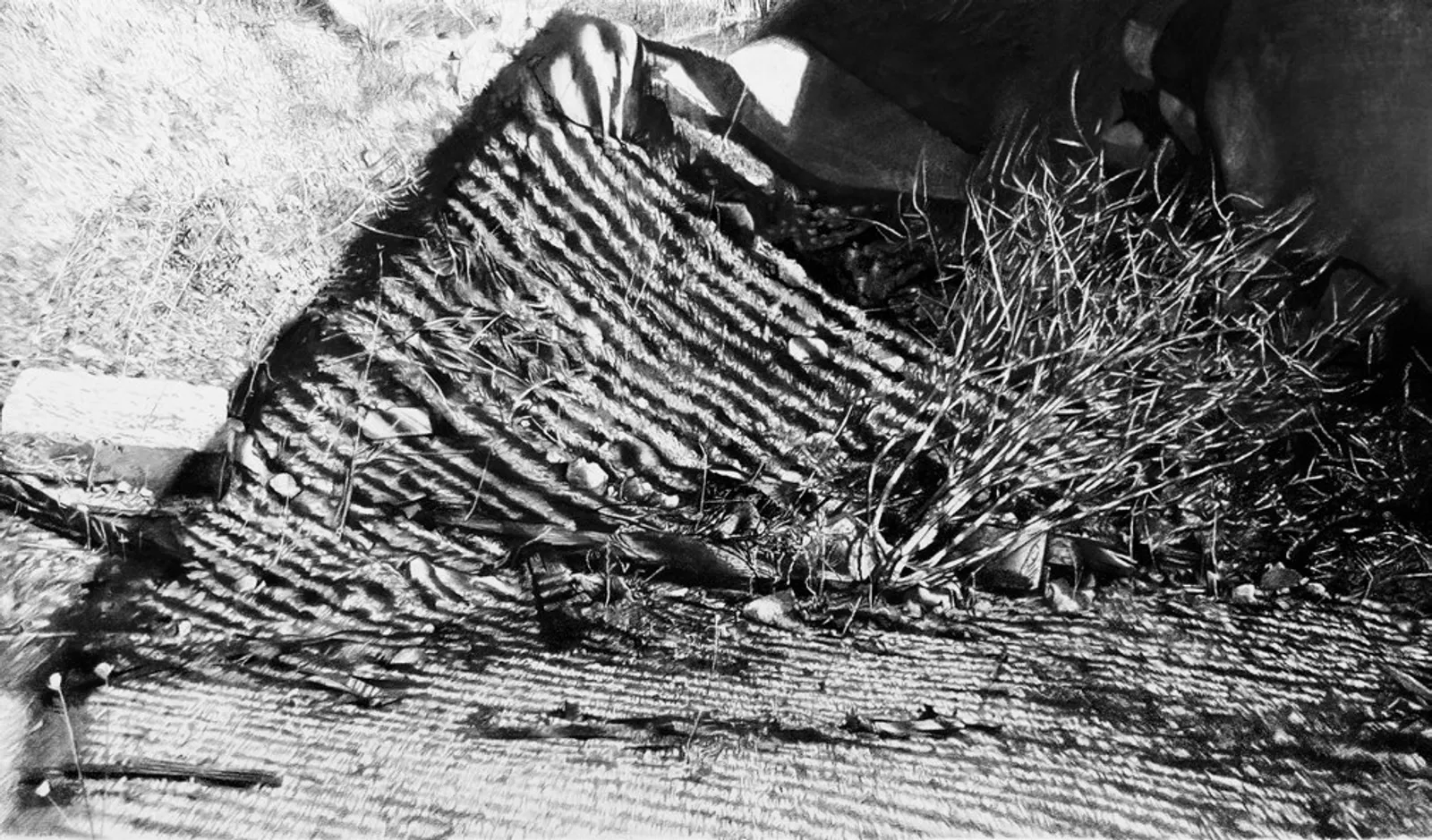
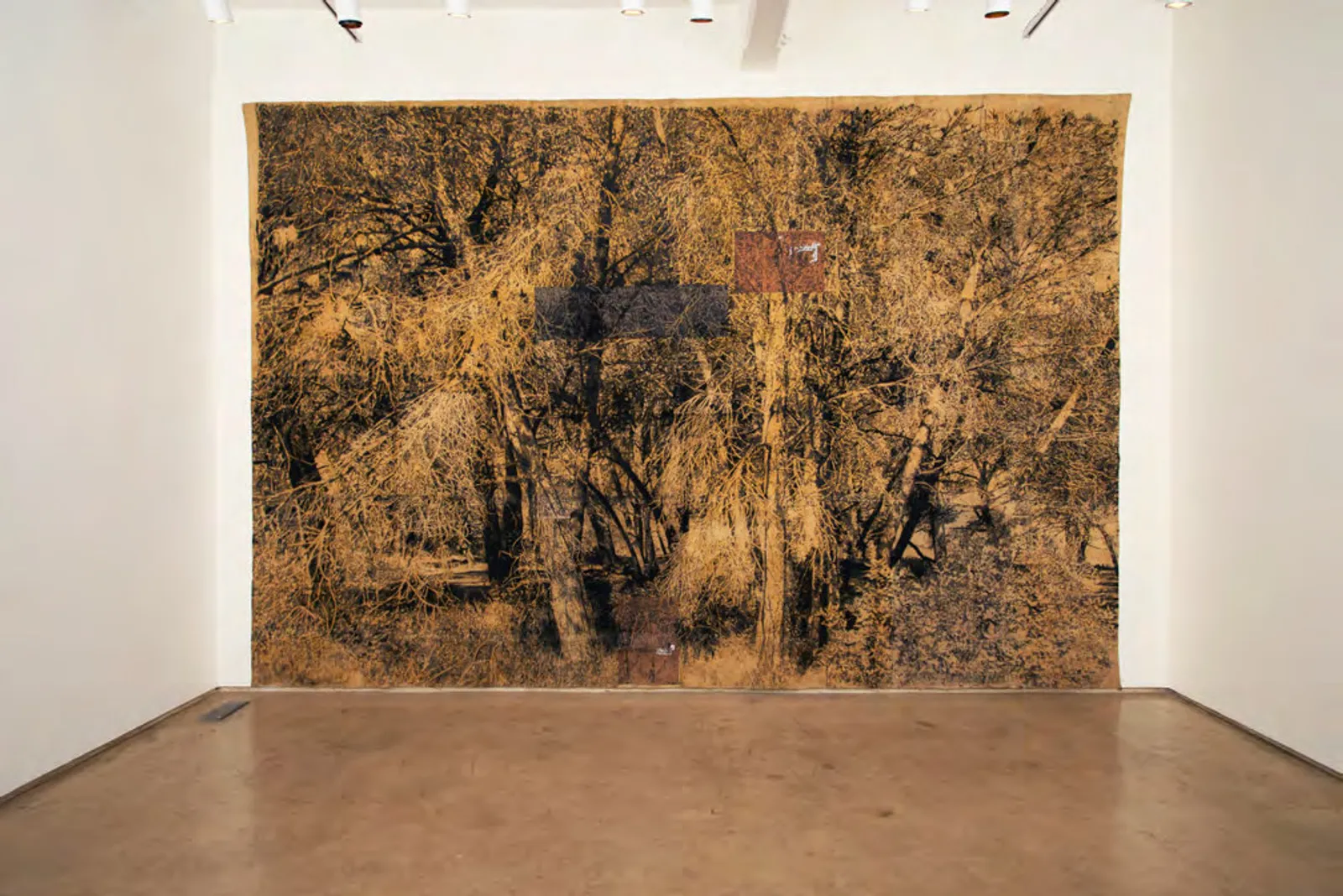
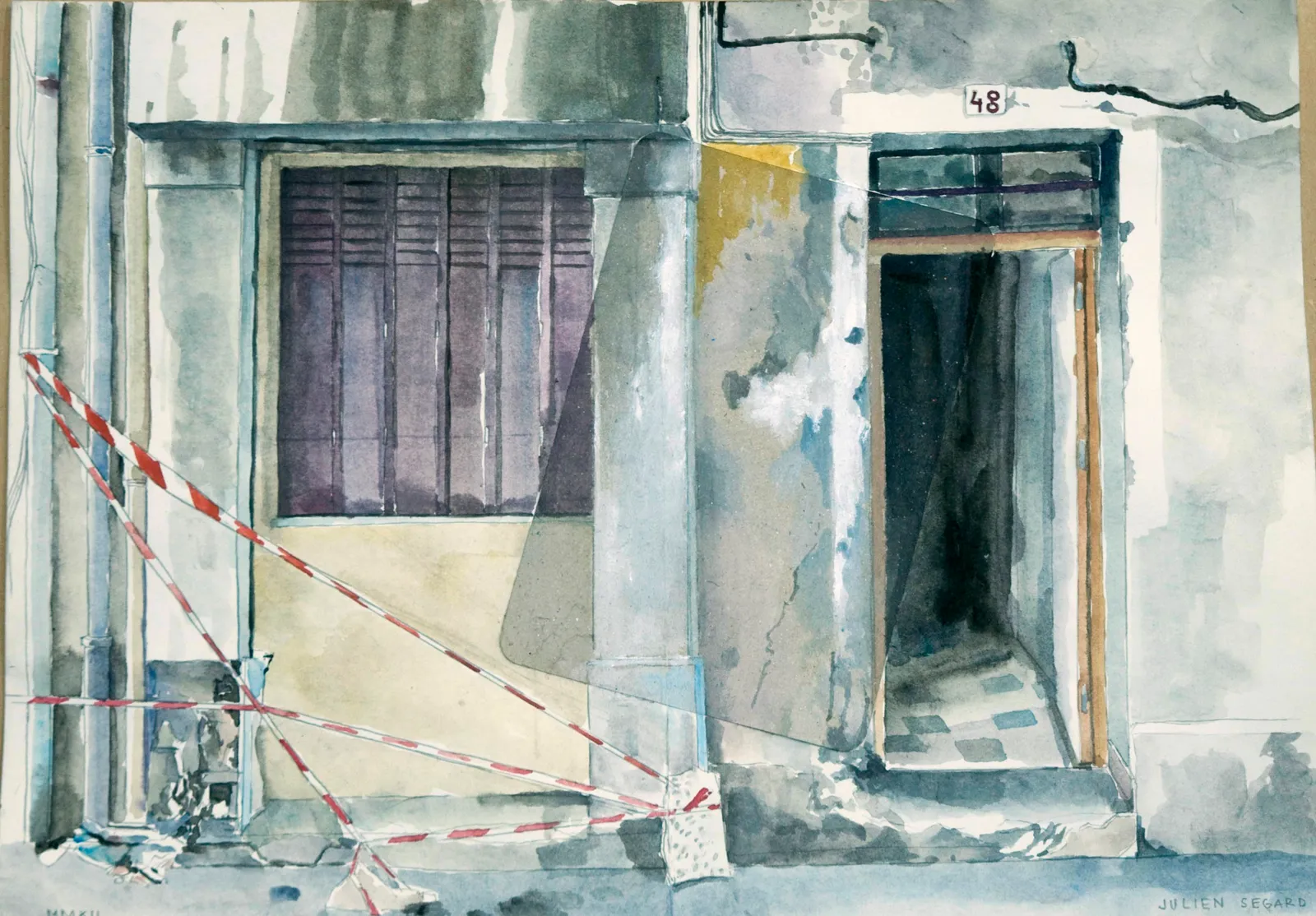
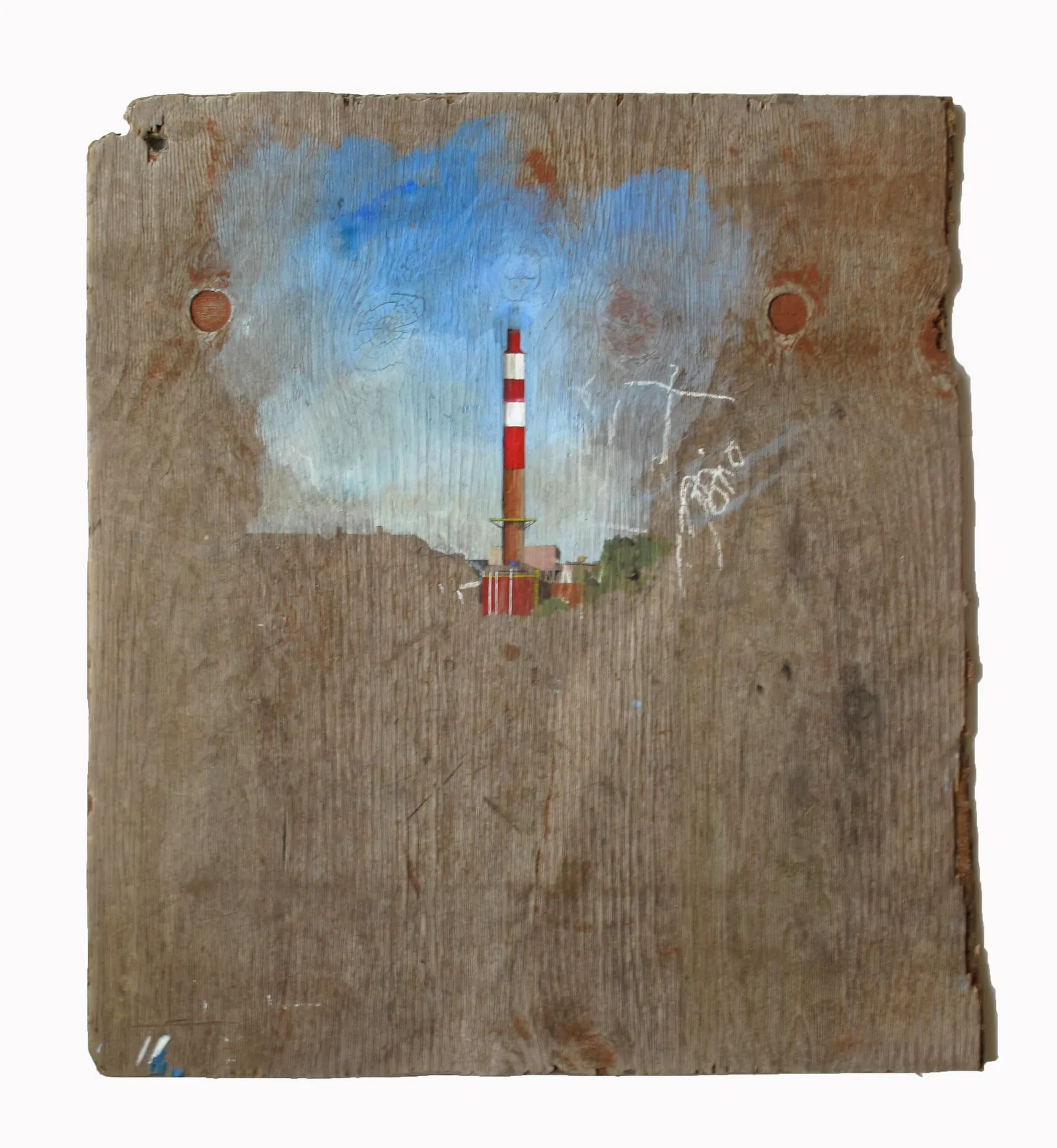
Three geographies run through this cycle, held together not by proximity but by a shared structure of looking. The first is Marseille and its surroundings — the city and, beside it, the Étang de Berre, a brackish Mediterranean lagoon ringed since the 1960s by one of the largest petrochemical complexes in the south of France, and the landscape of Segard’s childhood. Toxic (2008) was made on that ground, painted on the reverse of supports salvaged along the way — posters, frames, account-book covers, already worn by weather and pollution before the image arrived — and closing in a twenty-metre frieze of fishing boats left to decompose where their owners abandoned them. Falimente (2012) turns to the city’s shuttered shopfronts, taking Giacomo Balla’s 1902 study of a bankrupt shop and multiplying it until a whole economy reads as one long closing time, the same shutter falling on the corner shop and the blast furnace alike. Two decades on, from a studio in Goa, the same terrain returns as charcoal forest in Dancing at the Edge of Memory and The Edge of Memory, reconstructed from memory at a distance. Distance is not treated as loss: the remembered territory arrives mixed with everywhere Segard has lived since, and the work takes that contamination as a collaborator rather than a corruption — a reading drawn from Anna Tsing’s The Mushroom at the End of the World.
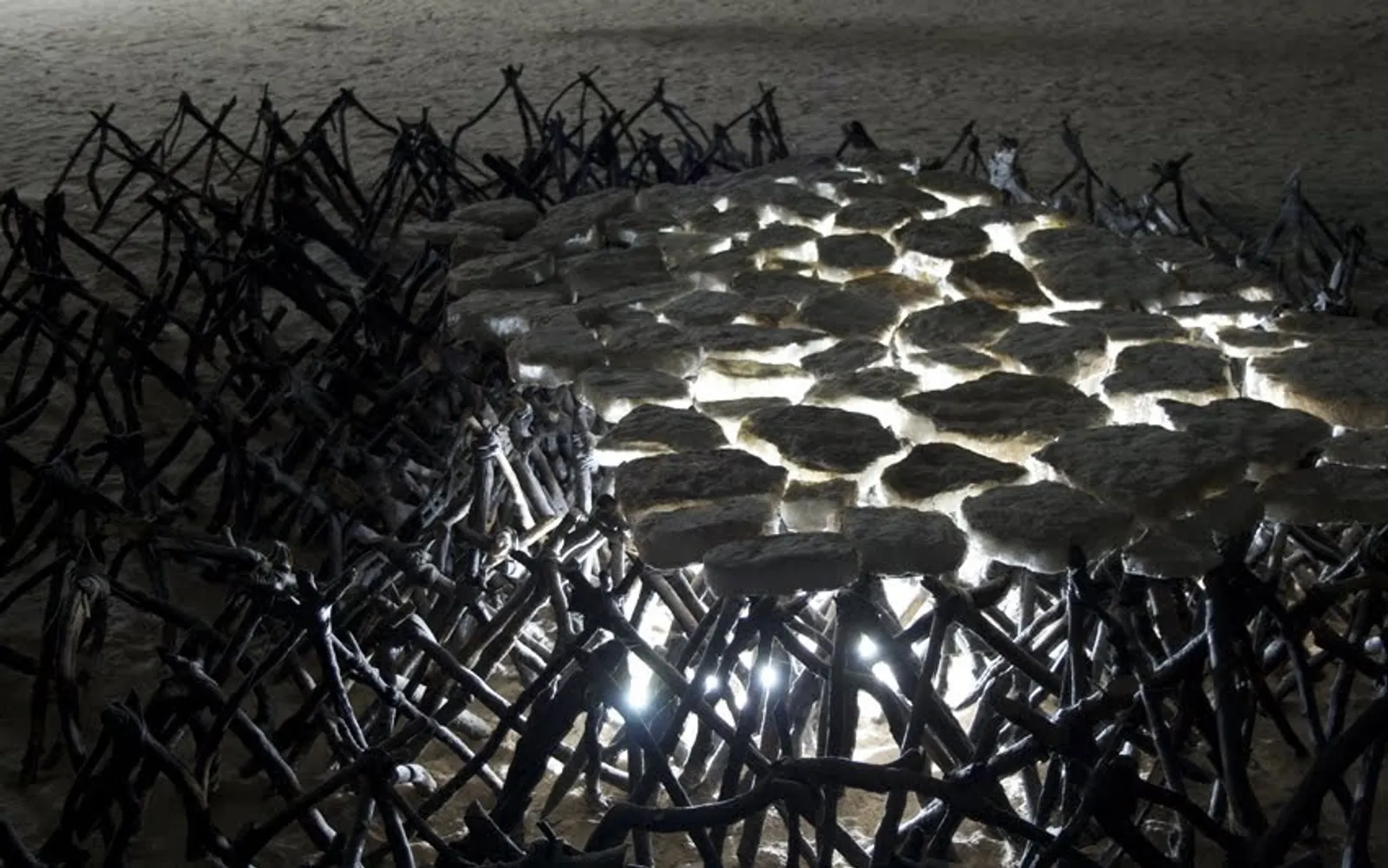
The second geography is Mali. Terrains Vagues (Bamako, 2009) drew the banks of the River Niger in charcoal across the back walls of the building — the rocky banks, the pirogues, the silhouettes of the fishermen — and set against them The Servants’ Bed: blocks of salt resting on a tangle of charred wood, the extraction of salt and its transport laid out at once as an unstable roadway and as a bed-frame of suffering, its sleepers drawn in wood soot and watercolour on the broken blocks. The third is Delhi, where Segard lived and worked for a decade, and which supplies the urban register of the same reading — the undersides of flyovers, underpasses and interstitial spaces, the gaps in the megacity’s fabric that offer refuge as much as ruin. What these grounds share is a way of reading: the landscape as palimpsest, dispossession legible in its details, and charcoal itself, a material that inscribes and wears away in the same gesture, as the argument’s medium. The oil palm and the rusted hull at Old Goa, where that reading turns to face the commodity directly, have since become a cycle of their own — The Barge.